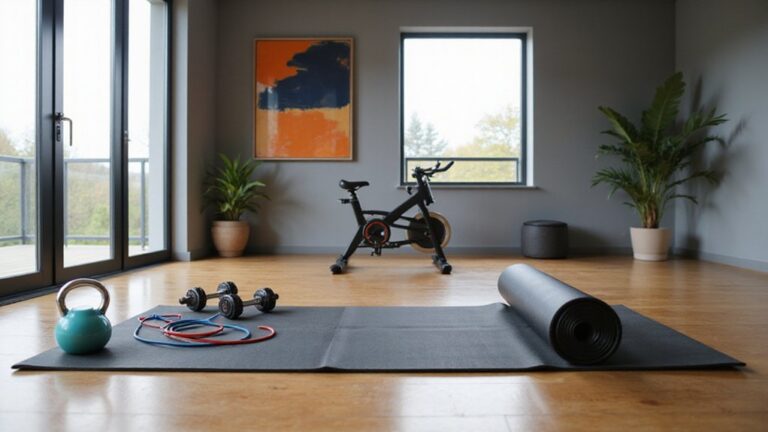
AI can supercharge your morning by analyzing your habits through apps like Streaks or Way of Life, identifying patterns like coffee intake spikes or workout slumps. Let it automate repetitive tasks—like scheduling your coffee machine or setting workout reminders based on your energy peaks. Use Notion templates to block time for morning goals, then let AI suggest tweaks, like adding a 5-minute stretches after hydration reminders. Pair with smart home devices to sync routines: “Hey Google, start my workout playlist *and* a 10-minute hydration timer.” Soon, mornings won’t feel like chaos, but a precision-crafted routine where AI handles the guessing—and you focus on the doing. 🔄☕
Highlights
- Analyze Habit Patterns: Use AI to track and visualize personal data, identifying conflicts like workout slumps or late-night scrolling to optimize schedules[BACKGROUND].
- Curate Adaptive Routines: Implement AI-driven micro-goal prioritization, adjusting workouts to energy levels and randomizing activities to prevent stagnation[BACKGROUND].
- Auto-Buffer Routine Tasks: Automate repetitive tasks via smart home integration and voice commands, freeing mental capacity for strategic activities[BACKGROUND].
- Sync Cross-Platform Schedules: Integrate AI with calendars/apps to auto-block focus time, generate meeting summaries, and unify task management[BACKGROUND].
- Enforce Wellness Priorities: Deploy AI for hydration/nutrition reminders while scheduling mindful breaks, balancing logistics with mental well-being[BACKGROUND].
Analyzing Personal Habits to Optimize Schedules
These tools act like personal productivity detectives, sifting through your *habit tracking* data to spot patterns you’d miss in the daily grind. They’ll analyze your coffee intake, workout slumps, or late-night scrolling—then serve up actionable insights faster than you can say “Okay, Siri.”
For example, an app might notice you always skip meditation when work meetings run late, so it’ll suggest shifting that habit to the moment your alarm starts buzzing. It’s like *data analysis* for your daily life: sorting your messy “time closet” into neat piles, spotting wasted minutes, and whispering smart moves like “PSA: You’ve got 15 free minutes before lunch—go jog, not doom-scroll!”
Stuck snoozing? Not anymore—their calendars *decide for you*, slotting in habits where your real life leaves gaps. Magic trick: turning your routine into a well-oiled robot.
Curating Tailored Morning Activities
So, think small. Stop stressing over perfect routines. Your AI’s job is to tailor tiny moments into bigger habits. Say, “I need 10 minutes daily for mindful meditation” or “Gimme a 20-minute workout that doesn’t require equipment.”
Boom—your virtual coach will carve slots into your schedule before you even think, “Ugh, too busy.” Hint: Prioritize one micro-goal per day. Replace social media scrolls with missions: “Do 10 squats, then shake your legs out.”
Spot patterns: If mornings feel sluggish, swap your energizing workout to right after waking up. Too lazy for jumping jacks? AI can plan alternatives, like stair-climbing or driveway lunges.
Craving variety? Ask for randomized options: “Surprise me with today’s mindful meditation style.” AI won’t judge you (much)—just nudge you toward consistency.
Keep tweaking until your mornings hum like a well-oiled machine.
Automating Routine Tasks
Why waste mental energy on repetitive tasks when AI can handle them for you? Let AI prioritize your morning work—draft emails, analyze schedules, or sync smart home devices—using task prioritization techniques like time-blocking or energy-level matching.
For example, ask your AI: *“Schedule yoga if I’ve got 30 mins free, otherwise prioritize quick meditation.”*
Multiply this by smart home integration: voice commands (“Alexa, brew coffee!”) + auto-adjusting thermostat timers = less decision fatigue.
Imagine AI sarcastically quipping, *“Oops, did you snooze again? Your coffee’s ready… *again*.”*
Reclaim your brain’s bandwidth for the fun stuff—you’ve got better things than “did I lock the door?” habits. Automate the mundane, amplify the meaningful.
Integrating With Calendar and Productivity Apps
When morning chaos threatens to derail your schedule, AI tools transform calendar collisions into seamless syncs.
AI converts morning chaos to seamless syncs, transforming schedule conflicts into smooth productivity workflows.
Plug in Reclaim, and it auto-blocks tasks while respecting “focus time”—no more frantically rescheduling because your workday exploded.
Calendar.AI lets you link Google, Outlook, *and* your personal life into one view, so you never miss your kid’s soccer game *or* that Q3 deadline.
Tired of email tag? Amie auto-summarizes meetings and drops action items straight into your task list, then suggests “Let’s do this at 2 PM, you’re free!”—proving productivity analytics can feel like a clairvoyant co-pilot.
Sync once, thrive everywhere. Hack smarter.
Personalizing the Routine for Energy and Focus
Even though mornings can feel like a chaotic scramble between your snooze button and skinny coffee, AI tools let you design routines that snap you into focus faster than a triple-shot espresso (minus the 3 PM crash).
Tell an AI like Microsoft 365’s Copilot or Taskade’s generator your schedule and goals—they’ll map moments for energy-boosting snacks (yes, apples and peanut butter count!) and focus-enhancing rituals like timed meditation sprints.
For example: “I need brain fuel by 7:45 AM without a breakfast cave adam moment.”
Swap mindless scrolling for guided intention-setting. Ask, “Which 5-minute stretch clears fog?” or “What snack’s optimized for my 9 AM Meeting?”
Stop bribing yourself with coffee birthdays; give AI your messy schedule, and it’ll boil it down to a morning flow that hums like a well-oiled espresso machine.
Ready to upgrade your routine?
Adapting to Unexpected Scheduling Changes
Plug a last-minute Zoom call into Reclaim.ai—*bing!* It auto-blocks an hour elsewhere, auto-tagging “critical adjournment” so prep feels seamless.
Unexpected tasks? Flexible planning saves the day. You tweak time blocks on the fly, shifting coding sprints or coffee breaks with a swipe.
Here’s why it works: Buffer time slips into aliases. Need to swap emails to handle a client crisis? AI reschedules TED Talk deep-dives without batting an eye.
Think of it as task tetris – blocks shift, but your *flow* stays intact.
“How’d I manage before?” you’ll ask, when a squirrel of an interruption whisks away your 2pm admin block.
Answer: With *worse* caffeine headaches. Roll with it.
Balancing Wellness and Logistics in Daily Routines
Tap water first, coffee later. Your day shouldn’t begin with *both* mental fog and dehydration.
Rehydration prevails. Morning water topples fog while coffee waits.
AI can schedule hydration reminders and meal tracking so you don’t forget healthy nutrition—or your keys. Ask your smart speaker: “Hey, when’s my next water break?” or “Can you find a 15-minute meditation video?”
Think of it as a digital PA: managing logistics (meetings, errands) while freeing you for mindful moments. No, really. Program “mountain pose at 3 PM” into your AI calendar, right after “bring report to Bob.”
Rhythm, not rules. You prioritize kale. Robots handle the rest.
FAQs
How Long Does It Take to Set up Ai-Driven Morning Routines?
Setting up an AI-driven morning routine takes anywhere from 5 minutes to an hour, depending on whether you use pre-built templates or customize with prompts.
Tools like ChatGPT or Taskade’s generator can spit out a plan faster than you can brew coffee—just input preferences (exercise, meditation, work prep) and boom, you’re done.
Want it tailored? Spend a few minutes tweaking prompts: *“Make my routine include a jog and journaling”* or *“Prioritize deep work hours”*.
Minutes—not hours! What’s your current routine, huh? 😴 Set an alarm.
Can Small Businesses Effectively Implement Ai-Driven Routines?
Small businesses can boost efficiency and unlock growth opportunities with smart AI strategies.
Start by spotting pain points—like time-wasting tasks or inconsistent customer service—and plug in ready-made tools. For instance, an AI chatbot handles customer queries around the clock, while predictive analytics tweaks inventory to avoid stockouts.
Focus on low-cost solutions first: maybe a free workflow automation tool or a template-driven marketing AI. Think of AI like a sharp new team member—train it, keep it updated, and let it shine in areas where you need extra firepower.
Prioritize tasks that fray your nerves (like scheduling or social media management) and watch productivity jump while keeping costs low.
The key? Start small, stay curious, and remember AI evolves—like that morning coffee, it’s a daily ritual that keeps things smooth.
Are Ai-Powered Routines Private and Secure?
Your AI routine might seem magical, but check its data privacy first. Some tools collect more info than a snoop at a blockbuster premiere.
Security measures like encryption keep your schedule safer than a locked diary. Avoid apps that share data like confetti; opt for ones using data minimization.
Privacy policies? Read them briefly—they’re like novels most skim, but red flags like vague “third-party sharing” clauses are deal-breakers.
Want your AI to keep your secrets? Demand encryption up front.
What if AI Misprioritizes Tasks in Automated Routines?
If AI messes up your task prioritization, remember: you’re the boss, not the algorithm.
First, do quick task evaluations—scan that morning schedule and swap tasks that *actually* align with your goals. Like, if “respond to urgent email” keeps getting buried under “watch cat videos,” you adjust.
Routine adjustments are your superpower—tweak inputs, set clearer priorities, or feed the AI more info. Pro tip: Most AIs work with what you *give* them. If it’s prioritizing wrong stuff, reteach it. For example: “Hey AI, ‘urgent’ means deadlines today, not ‘my snack order.’”
Seriously, though—daily checks take 2 minutes and keep your routine on track. Why let the AI win? You’re smarter, even half-asleep. 🛠
How Do AI Routines Handle Last-Minute Schedule Changes Successfully?
Your morning coffee meeting suddenly moves to 9 AM? No sweat!
AI’s smart scheduling tools use adaptive algorithms to tweak your routine seconds later. These algorithms don’t just panic—like you might—they analyze real-time traffic, emails, and app alerts to swap tasks or block buffer zones.
They’ve studied past delays to guess what might go wrong next, predicting (spoiler alert) work-from-home days just fine.
Need to grab a latte? Your AI app adjusts, sliding time blocks instantly. “Boom, schedule updated!” it’ll say.
Less stress, more flow. Who needs a crystal ball when you’ve got math on your side?
Final Thoughts
Conclusion:
*Let’s face it—AI isn’t just for robots; it’s your new alarm clock.* Tell it your sleep habits, how you (sort of) exercised yesterday, and even your coffee dependency. *Boom!* It’ll spit out a routine tailored to your quirks. *Automation tackles the boring stuff* (bye-bye, repetitive emails!) *while you nail the wins*. Tooウト.currentIndex to function? *Your AI adjusts in real time*. Need inspiration? Try “hydration + yelling @ the sun” (thanks, ChatGPT). With AI as your sidekick, mornings go from “chaos” to… *less chaos*. Which, let’s be real, is basically the same thing. HACK. ON.